Lekab-röst

Conversational AI in Business Messaging

What's Possible When Voice Meets RCS

The moment everything changes

A customer contacts their bank on a Tuesday afternoon. Not through a phone queue. Not through a web form. They send an RCS message asking why a transaction looks strange. The bank's system understands the intent immediately – not just the words, but the context. It retrieves the relevant transaction, identifies the likely explanation, and responds within seconds.

The customer reads the reply but has follow-up questions. It's easier to just talk. With a single tap, the conversation transitions seamlessly into an interactive voice call – no new number to dial, no need to repeat themselves. The AI carries the full history from the text conversation and picks up exactly where it left off, now in voice. It interprets tone, intent, and meaning in real time, guiding the customer to a resolution.

The next day, a new question comes up. This time the customer chooses to type again. The conversation is picked up instantly – no re-identification, no restart. It doesn't matter whether it happens over text or voice. The thread is the same.

This isn't a concept. It's the direction business messaging is moving – and it's moving fast.

Do you want to know more about Conversational AI and RCS?


Contact us

Enable conversations that drives sales and loyalty

Customer communication

Interact with customers through updates and notifications. Go from information to conversation, to conversions.

Marketing
Marketing

Market ads that leads to conversations in the customer journey and increase your revenue. Maximize ROI with rich content campaigns in RCS and in conversations with AI.

Customer support
Customer support

Increase your customer satisfaction with personal support via live chat and create deeper relations with prospects and customers that helps your company grow. Enhance the customer dialogue!

Why conversational AI changes the rules 

Traditional business messaging has always been one-directional at heart. Send a notification. Confirm a delivery. Remind about an appointment. Useful, but limited.

Conversational AI shifts this fundamentally. Instead of businesses talking at customers, they can talk with them. The system understands what the customer means, not just what they typed or said. It maintains context across a conversation. It knows when to respond automatically and when to involve a human.

For businesses operating at scale, this isn't just convenient—it changes the economics of customer engagement entirely.

The voice layer: why it's harder and why it matters

Text is relatively tractable. Voice is where things get genuinely complex. When a customer interacts via voice, the AI needs to do several things simultaneously:

Transcribe accurately, accounting for accents, background noise, and speaking pace.

Parse intent, separating what the customer said from what they actually mean.

Understand tone and urgency, because "I need help with my order" delivered with frustration carries different weight than the same words delivered calmly .

Maintain context from earlier in the conversation, whether that earlier exchange was text or voice Getting this right is hard.

But businesses that get it right gain something meaningful: interactions that feel human, at a scale that humans alone could never reach.


What this looks like in practice

A logistics company handling thousands of deliveries a day. Customers call in asking about their packages. The AI identifies the customer, retrieves the delivery information, understands the question, and responds – often before a human agent has even had a chance to see the case.

A retailer running a post-purchase campaign via RCS. Customers reply with questions, complaints, and praise. Some in text, some by voice. The system handles the high volume, escalates the exceptions, and learns from every interaction to improve the next campaign.

A healthcare provider using RCS to follow up with patients. A patient replies with a voice message explaining that their symptoms have changed. The AI flags the urgency, routes to the right team, and ensures nothing falls through the cracks.

In each case, the value isn't the technology itself. It's the business outcome: faster resolution, better accessibility, higher engagement, and a customer experience that doesn't feel like a machine.

Vad är RCS? jpg

The infrastructure question

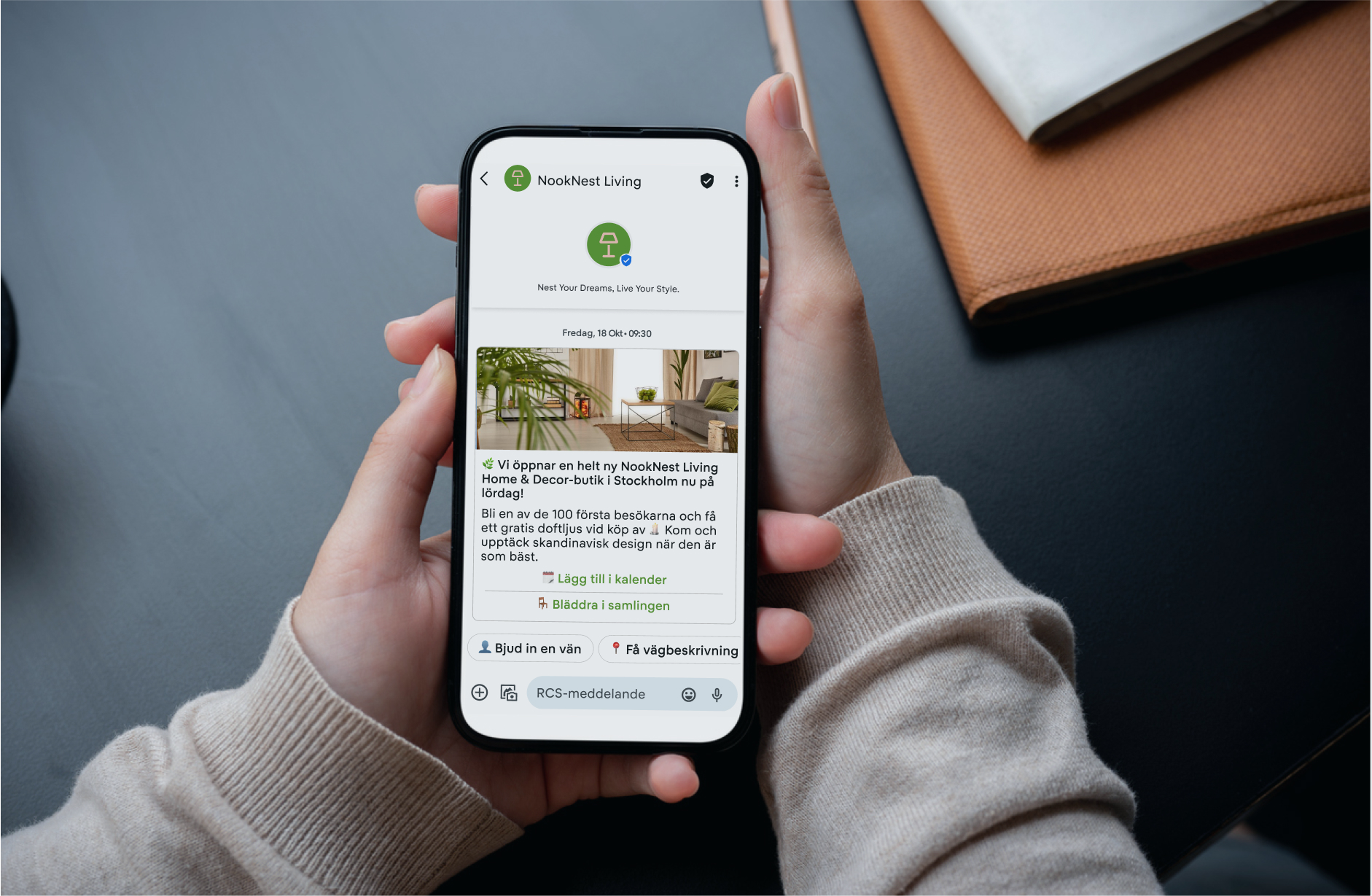
None of this works without reliable messaging infrastructure at the foundation. Conversational AI is only as good as the channel it runs on. RCS offers something no other business messaging channel can currently match: rich, interactive, verified communication delivered directly to the customer's phone. Add conversational AI on top of that foundation, and the result is a customer experience that feels genuinely modern – not stitched together from legacy systems.

Voice via phone calls is the most traditional channel for customer engagement. Conversational AI has the potential to replace a large share of manual interactions in customer service with full automation.

Combined, RCS and voice together with conversational AI represent a generational shift in how businesses interact with their customers.

The companies that will lead in customer engagement over the next five years are the ones building on exactly that foundation today.

infrastructureOrange1

What's next

Conversational AI in business messaging isn't a distant possibility. It is being used now, in production, across multiple industries. The gap between companies that are using it and companies that aren't is already widening. For most businesses, the question isn't whether to adopt conversational AI. It's where to start, and on which channels. RCS, with its reach, richness, and two-way functionality, is the obvious answer for the future.

Interactive voice, with its accessibility and natural flow, only strengthens the offering.

RCS difference

Want to speak about what Conversational AI and RCS can do for your customers?

We have broad and deep expertise in mobile messaging services and automated communication.